RF SENSING · HARDWARE // SHELLHACKS 2026
PHASE
After a building collapse or in a smoke-filled structure, rescuers have to decide where to search with almost no information. PHASE gives them a starting point: sensor nodes placed around the area pick up motion in the WiFi passing through each zone and listen for sound, and a live dashboard ranks the zones so crews know where to search first. Built in 36 hours with a team of four at ShellHacks 2026.
// OVERVIEW
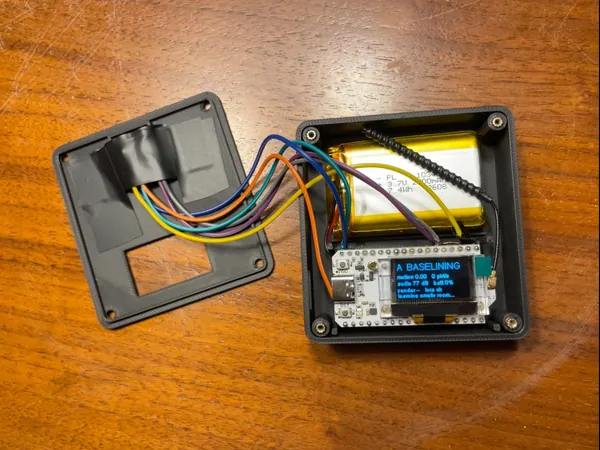
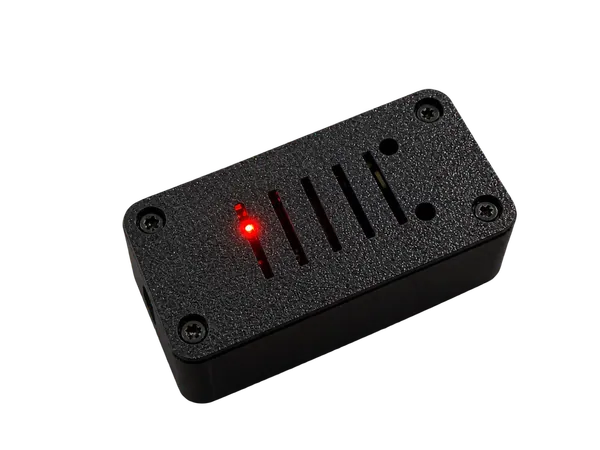
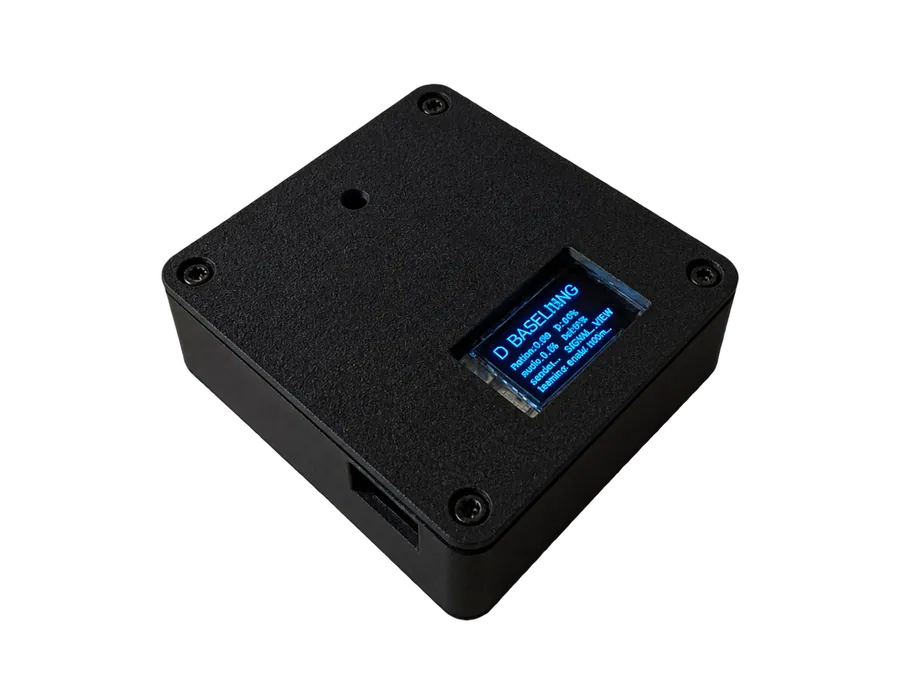
PHASE is a presence sensing system for first responders: a set of ESP32 nodes you place around a zone to tell whether anyone is inside before you enter. Each node transmits WiFi and reads the channel state information (CSI) back off those signals, so motion in the zone shows up as distortion in the channel, even through walls. The same nodes carry microphones that stream live audio. Every CSI and audio stream is watched by a machine learning model trained to pick out signs of activity, like CSI interruptions and loud sounds, and those outputs feed a heuristic scoring system that rates how much activity is in each zone and flags when someone is likely present. Readings travel over a Heltec LoRa 32 V3 backhaul to a live feed at the command position, and every node is housed in a custom 3D printed enclosure built from scratch for the project. My team of four built it in 36 hours at ShellHacks 2026.
// SYSTEM ARCHITECTURE
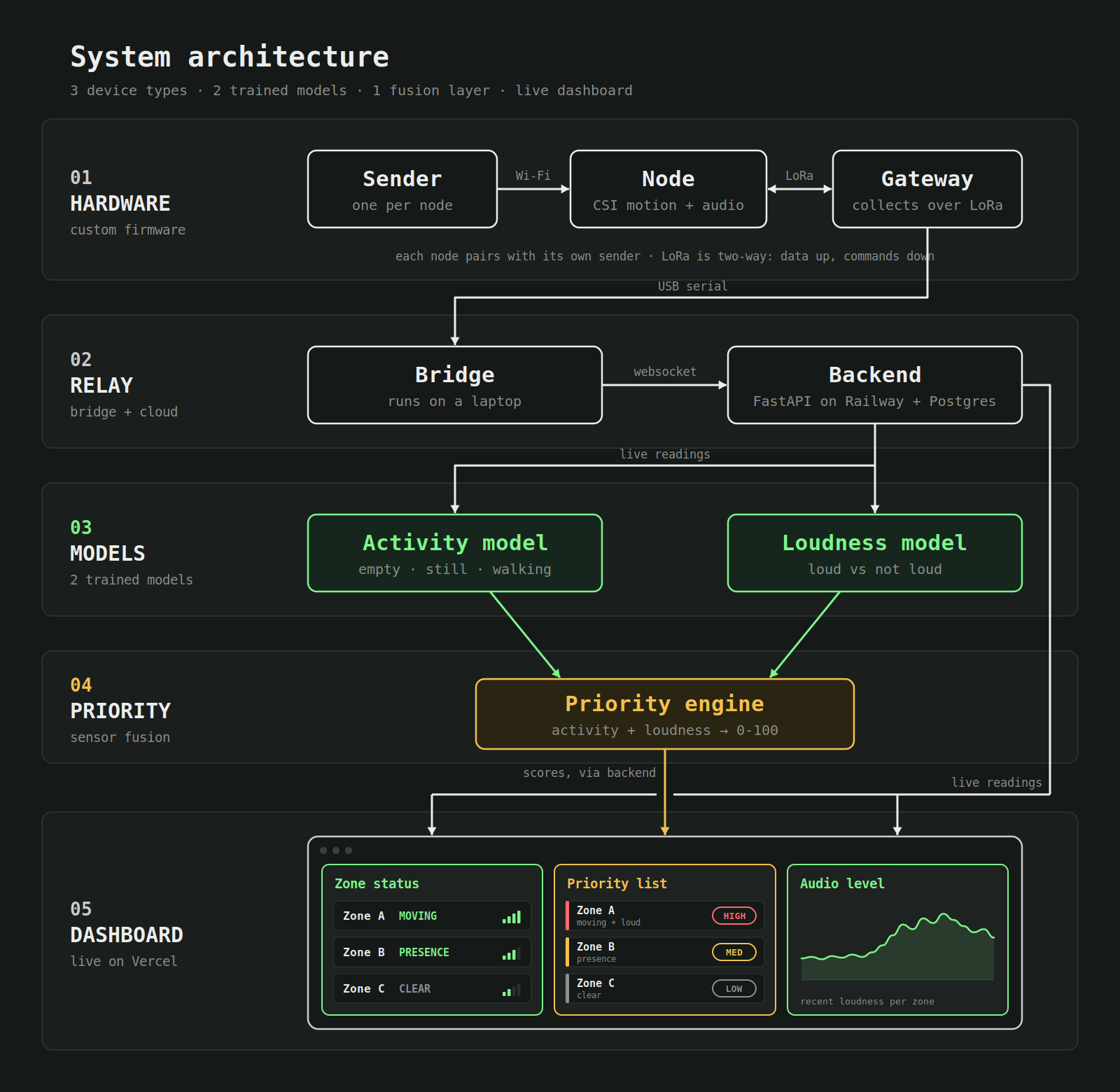
Five layers end to end: hardware, relay, the two trained models, the priority engine that fuses them, and the live dashboard.
// NETWORK ARCHITECTURE
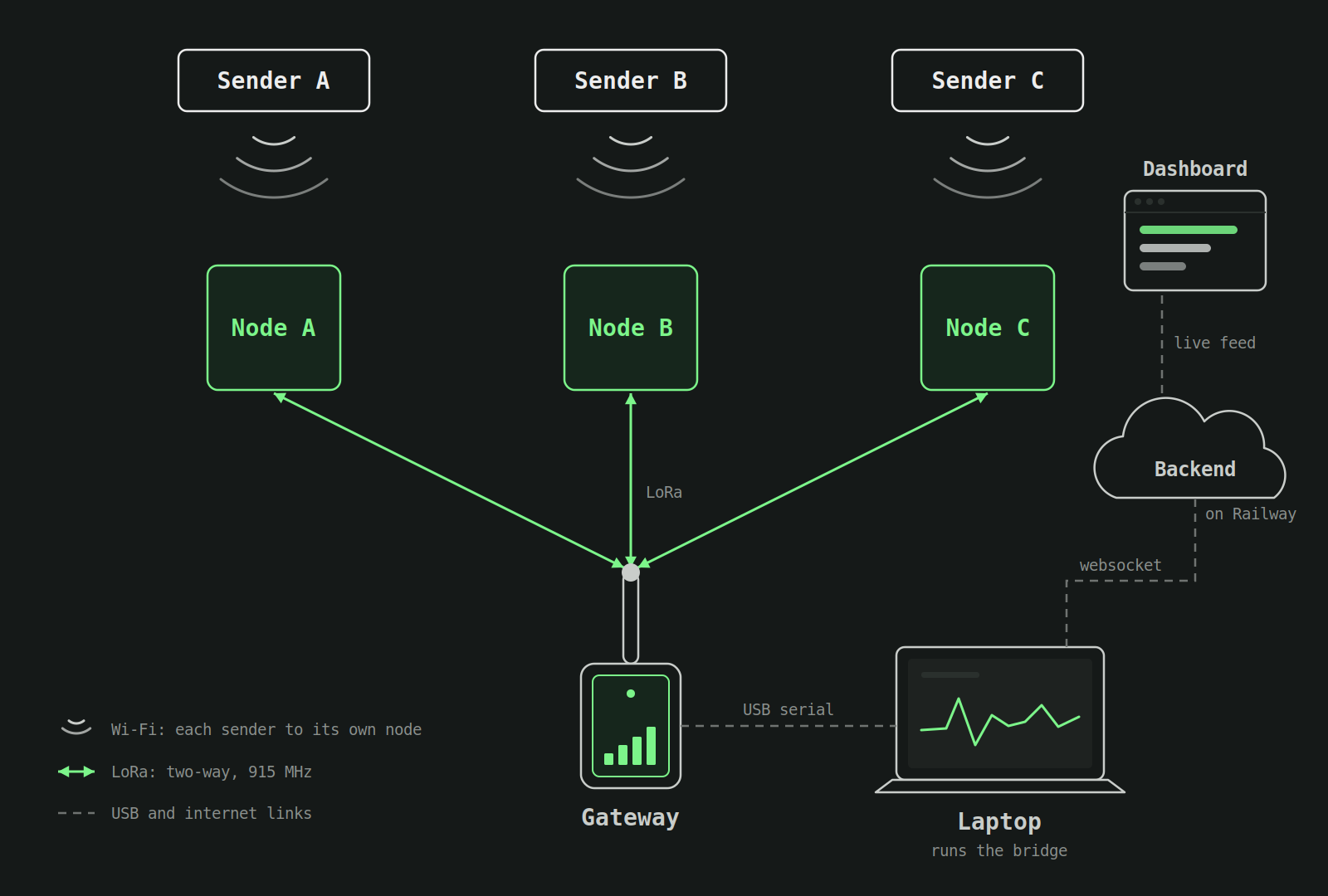
Each node pairs with its own sender over Wi-Fi. Senders only need USB power and never touch the laptop. Nodes reach the gateway over two-way LoRa, then on to the laptop bridge, backend, and dashboard.
// AUDIO MODEL
One network shared by two models: a loudness model that runs live on node readings, and an experimental scream model that runs on a laptop microphone.
// HIGHLIGHTS
- ›RF Sensing: ESP32 nodes measure distortion in WiFi channel state information (CSI) to detect human presence and movement through walls.
- ›Acoustic: INMP441 microphone nodes flag acoustic anomalies inside the structure.
- ›Scoring: machine learning models monitor each data stream and feed a heuristic scoring system that rates activity per zone.
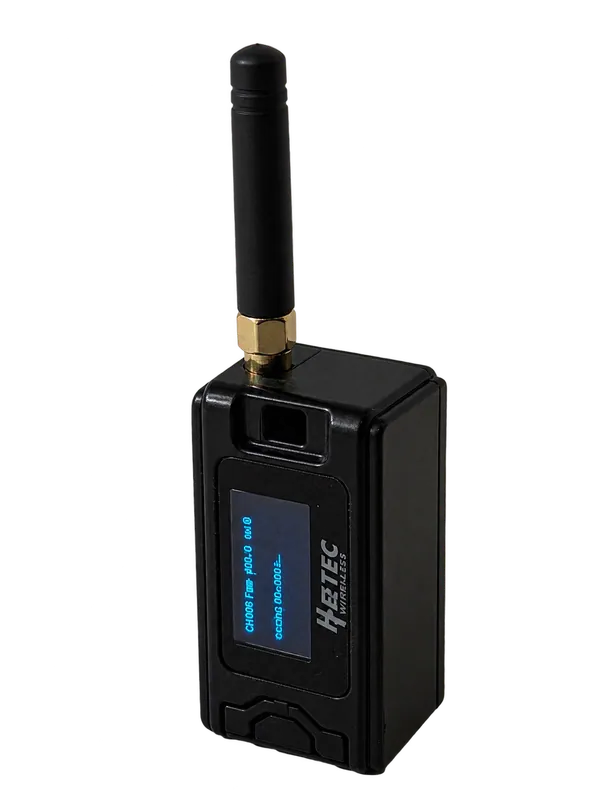
- ›Mesh + Dashboard: Heltec LoRa 32 V3 boards form the backhaul, feeding a live occupancy dashboard at the command position.
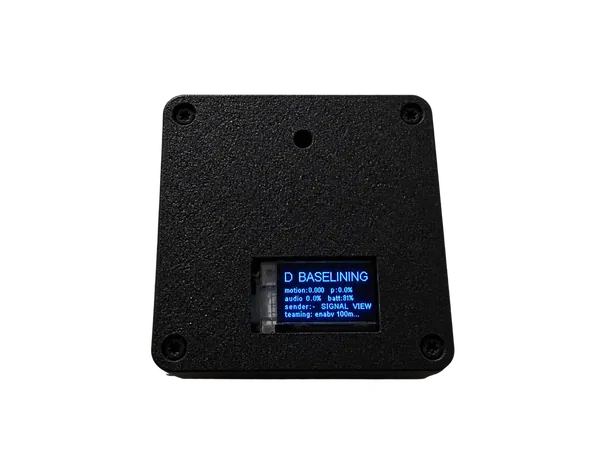
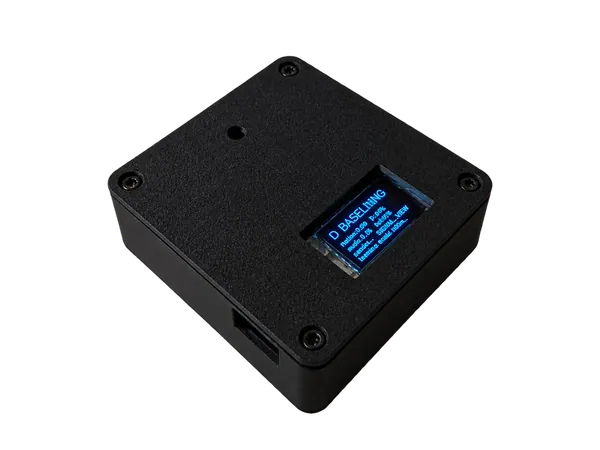
- ›Enclosures: every node housed in a custom designed, 3D printed enclosure built from scratch for this project.
// GALLERY